Between Myth and Mandate…
– Kishor Arjun
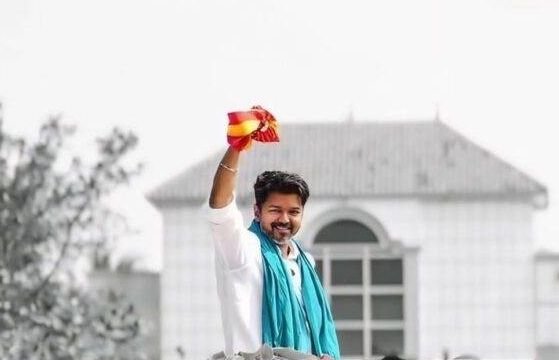
Tamil Nadu has once again blurred the line between cinema and politics. But Vijay’s rise is not merely another chapter in the state’s long history of actor politicians. It is also a reflection of a restless political moment, one shaped by generational anxiety, fatigue with dynastic politics, and a growing search for alternatives beyond the familiar Dravidian binary.
The Assembly elections in Kerala, West Bengal, Assam, Puducherry, and Tamil Nadu have thrown up several surprises. Except perhaps in Assam and Puducherry, and to some extent Kerala, the results overturned many established assumptions about regional politics. But it is Tamil Nadu that has drawn the most attention. The verdict there does not simply mark a transfer of power. It signals a subtle but significant shift in the political mood of the Tamil electorate.
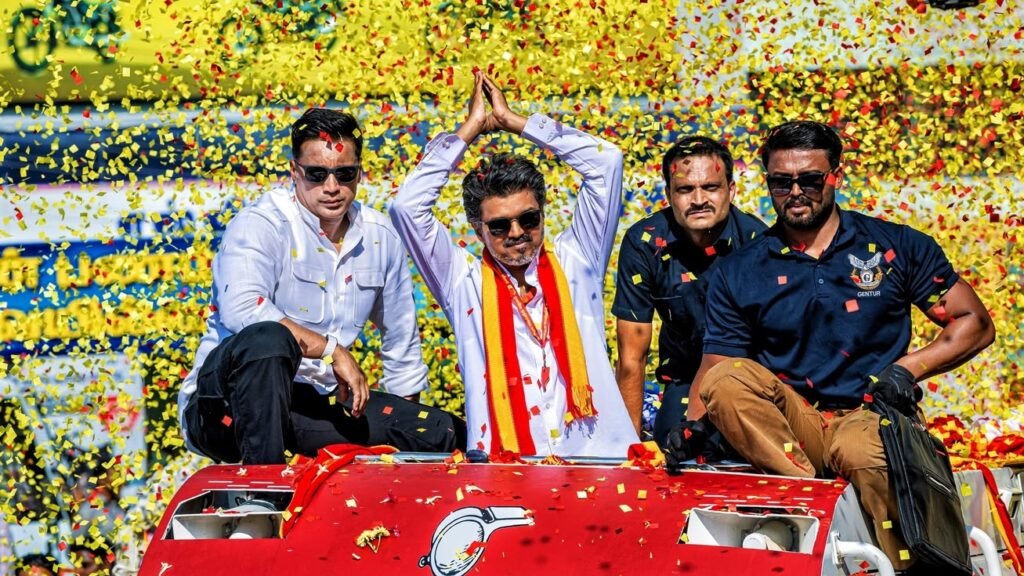
After years of speculation, hesitation, and public anticipation, the Tamil Makkal have finally placed their faith in the Tamizhaga Vetri Kazhagam (TVK). Founded barely two years ago by Tamil superstar Vijay, popularly known as “Thalapathy,” the party has managed to get 108 candidates elected to the Assembly, bringing it to the threshold of power. More importantly, the result has disrupted a political order that has dominated Tamil Nadu for over five decades: the deeply entrenched two party Dravidian system.
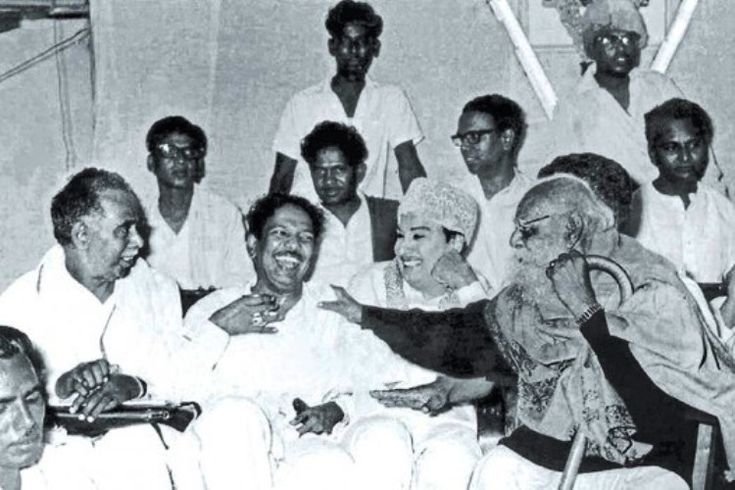
The comparison with MGR is inevitable. But unlike Vijay, MGR’s entry into politics was never abrupt. Long before he occupied the Chief Minister’s office, he had already become inseparable from the ideological and cultural imagination of the Dravidian movement. Inspired by Annadurai and shaped by the politics of Periyar Ramasamy, MGR’s cinematic image evolved alongside the rise of Dravidian politics. His partnership with Karunanidhi was not merely political, but deeply tied to the way cinema, language, and ideology intersected in Tamil Nadu during that period.
When MGR eventually broke away to form the AIADMK, he was not entering politics from outside. He was extending a political journey that had already been unfolding on screen for years.
Vijay’s trajectory, in many ways, follows a similar pattern. Over the last decade, he steadily signalled his political intentions through carefully calibrated public statements, symbolic interventions, and increasingly political films. There was also a period when his fan networks informally aligned themselves with Stalin’s DMK, partly as a reaction against the AIADMK government under Jayalalithaa’s successors.
But Vijay eventually understood a basic political reality: no force can emerge in Tamil Nadu without directly confronting the DMK. Over the last few years, his political language sharpened considerably. He openly positioned the DMK as his primary rival within the state, while describing the BJP as his ideological adversary at the national level. The electoral dividends of that strategy are now visible.
Gen Z and the Dravidian Identity :
For over half a century, Tamil Nadu’s political imagination has revolved around two poles: the DMK and the AIADMK. Even after the deaths of towering figures such as Annadurai, Karunanidhi, MGR, and Jayalalithaa, the emotional and ideological foundations of Dravidian politics have remained remarkably intact.
Questions of language, social justice, federalism, welfare governance, and Tamil identity are deeply woven into the social fabric of the state. For decades, the possibility of a credible third alternative appeared politically unrealistic. Vijay’s rise marks the first serious disruption to that assumption in years.
What makes his success particularly significant is the social profile of his support base. Early voting patterns suggest strong traction in urban and semi urban constituencies, especially among first time voters, lower middle class families, informal sector workers, and women dependent on welfare schemes. In Chennai, Coimbatore, Madurai, Tiruppur, Trichy, and parts of the Cauvery Delta, TVK appears to have tapped into a constituency that feels politically restless but not ideologically disconnected from the Dravidian legacy.
Tamil Nadu remains one of India’s most economically developed states. Yet beneath that success lies growing frustration around unemployment, rising educational pressures, the NEET examination, and the persistence of political dynasties. Vijay’s campaign repeatedly returned to these anxieties. In doing so, it connected strongly with Gen Z and younger Millennial voters.
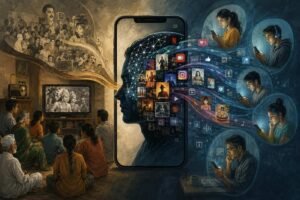
Across the world, younger voters have increasingly used elections to express disillusionment with established political structures. Nepal offers one recent example close to home. Vijay’s victory should therefore not be read simply as an extension of cinematic fandom. It reflects something deeper: the exhaustion of a digitally aware generation that no longer feels emotionally invested in traditional party structures, but still seeks political familiarity and cultural rootedness.
One reason Vijay’s campaign resonated was its ideological restraint. He avoided the aggressive nationalism and religious polarisation that dominate much of contemporary Indian politics. Instead, his rhetoric stayed within the broad grammar of South Indian political discourse: education, welfare, employment, anti corruption measures, federalism, administrative transparency, and Tamil identity.
His central appeal was simple: give us power not for the sake of power, but for governance centred around ordinary people.
Cinema as Political Language :
Cinema in Tamil Nadu has never functioned merely as entertainment. From the early decades of the Dravidian movement, cinema became a political instrument, a way to carry ideology into everyday life. Political leaders understood very early that films could shape public imagination more effectively than speeches or pamphlets.
Long before many ideological movements elsewhere in India grasped the political potential of cinema, the Dravidian movement had already mastered it. Through films and screenplays, writers such as Annadurai and Karunanidhi translated questions of caste inequality, linguistic identity, rationalism, and social justice into emotionally accessible narratives.
Films like Parasakthi did more than entertain audiences. They helped create political consciousness.
That tradition fundamentally altered the relationship between the screen and political life in Tamil Nadu. MGR perfected this transformation. He dissolved the boundary between cinematic morality and political legitimacy. The benevolent hero who defended the poor on screen gradually became indistinguishable from the political leader asking for votes.
Jayalalithaa later consolidated that emotional inheritance through party organisation and administrative authority.
Vijay, therefore, is not an anomaly. He is the latest inheritor of a political culture in which cinema and governance have remained deeply intertwined for decades.
The Limits of Charisma :
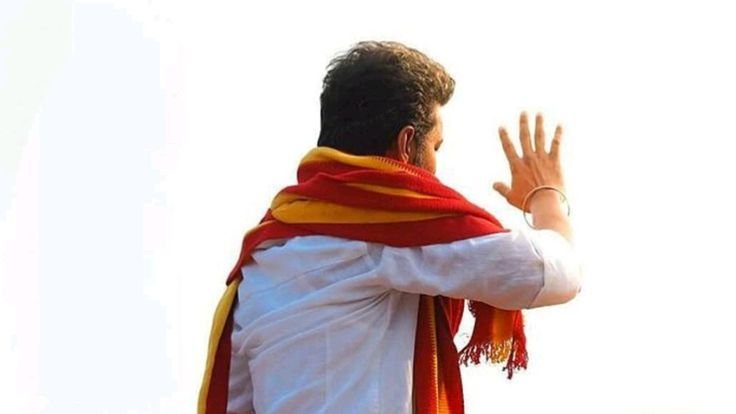
But cinema and governance are not the same thing.
Winning an election is one challenge. Running Tamil Nadu is another altogether.
Tamil Nadu is among India’s most administratively complex states. Its governance structure rests on an expansive welfare system, a sophisticated industrial economy, extensive public health and education networks, rapidly growing urban centres, and a bureaucracy shaped by decades of institutional continuity.
Popularity alone cannot manage that machinery.
Which is why Vijay’s first real test will not be an electoral victory, but governance itself, beginning with the formation of his cabinet. Personality driven parties often struggle to develop second rung leadership and administrative depth. Cinema celebrates the fantasy of a lone hero transforming society through sheer will. Democracies function very differently.
If governance becomes excessively dependent on a single individual’s charisma, institutional paralysis becomes a genuine risk.
There is also the question of delivery. Vijay made expansive promises during the campaign: welfare support for women, employment generation, healthcare expansion, affordable housing, educational reforms, and industrial development. These promises are politically attractive. Implementing them, however, requires fiscal discipline and long term planning.
Tamil Nadu’s debt burden currently stands at ₹9.52 lakh crore. Balancing welfare commitments with economic sustainability may become one of the defining challenges of Vijay’s tenure.
Beyond “Thalapathy” :
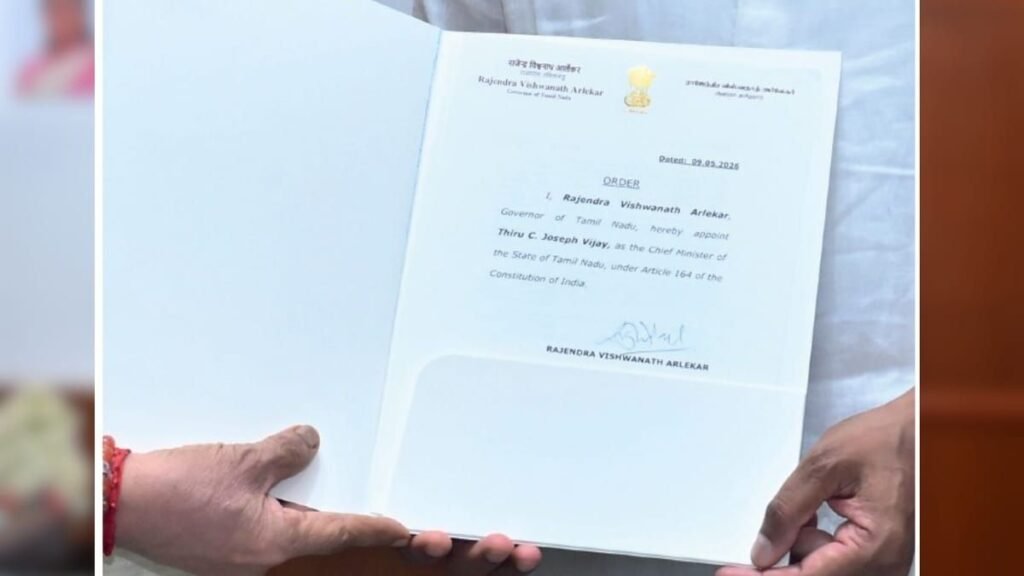
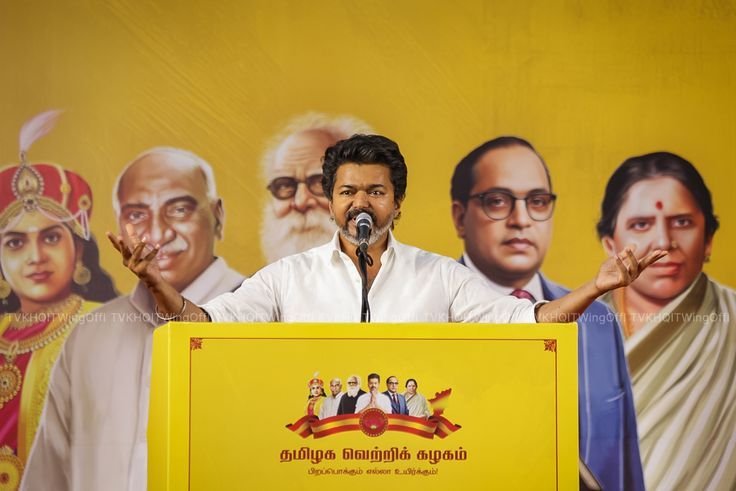
Vijay may soon take oath as Chief Minister. But his ambitions appear to extend beyond Fort St. George. His comments after the election results, directed not only at the DMK but also at Prime Minister Narendra Modi, suggested a leader already thinking beyond state politics.
The larger question now is whether TVK can evolve into a durable political institution, or whether it will remain emotionally dependent on Vijay’s personal popularity.
Can Vijay move beyond the carefully constructed “Thalapathy” image and emerge as something more politically enduring, a genuine Jananayakan shaped by democratic responsibility rather than cinematic mythology?
Tamil Nadu’s political history offers both inspiration and warning. The state has elevated actors to extraordinary heights. But it has also discarded them with equal speed. From Vijayakanth to Kamal Haasan, charisma alone has rarely guaranteed political permanence.
The next few years will therefore be decisive.
If Vijay can provide ideological clarity to TVK, build an experienced administrative team, maintain fiscal balance, and strengthen institutions rather than merely amplifying personality driven politics, he may eventually expand his influence far beyond Tamil Nadu.
Otherwise, his rise may remain a powerful but temporary expression of a politically restless generation.
Cinema halls can create stars. They can even create leaders. History, however, remembers something else entirely: how power is exercised once the applause fades.
The writer is a filmmaker who writes on society, culture, and politics._
email : kishor.opera@gmail.com
The writer is a filmmaker who writes on society, culture, and politics._
email : kishor.opera@gmail.com