“Begin Austerity Within Your Own Party”; Raj Thackeray’s Open Letter to PM Modi
xr:d:DAE7V6AcCRI:989,j:6281815261688570815,t:24022410
Mumbai :
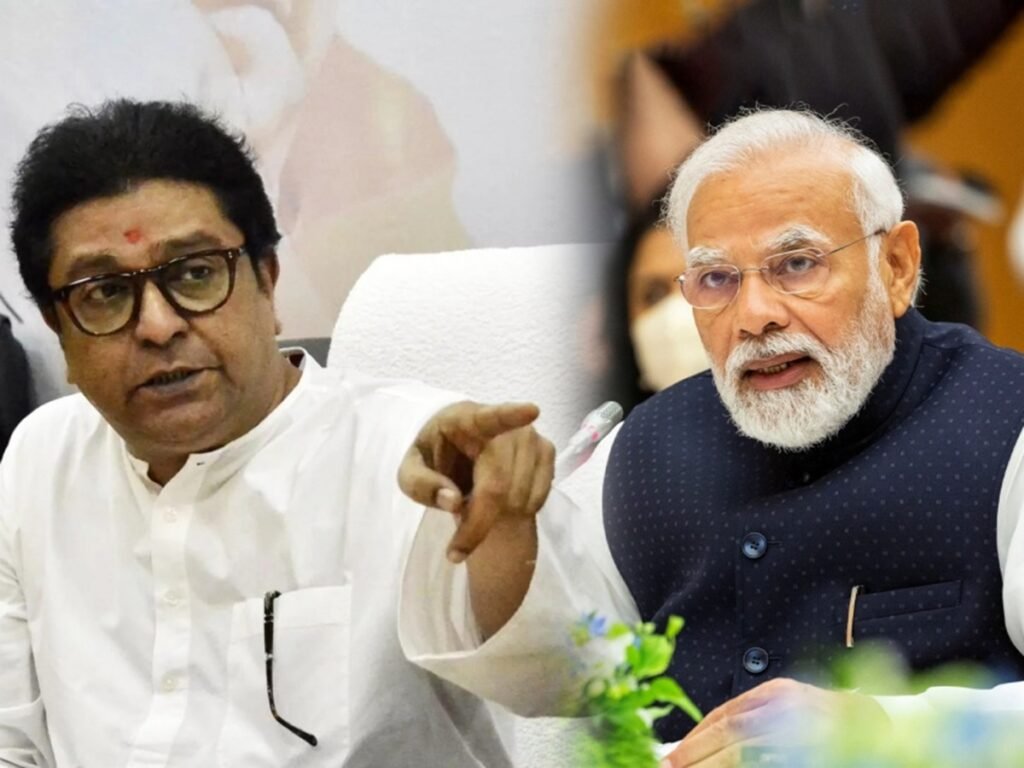
Launching a sharp critique of Prime Minister Narendra Modi’s recent appeal for austerity amid rising global crude oil prices and economic uncertainty, Raj Thackeray on Tuesday issued a strongly worded open letter questioning what he described as the “disconnect” between the government’s public messaging and its own conduct.
In the letter, Mr. Thackeray criticised the Prime Minister’s reported appeal to citizens to reduce discretionary spending, avoid unnecessary foreign travel, cut fuel consumption, and adopt energy-saving alternatives such as electric vehicles and work-from-home arrangements. According to Mr. Thackeray, such appeals placed the burden of economic stress disproportionately on ordinary citizens while political leaders themselves continued to engage in “lavish roadshows, convoys and public displays”.
“The mistakes are yours, but why should citizens bear the punishment?” Mr. Thackeray asked, accusing political leaders of failing to practise the austerity they advocate.
The Maharashtra Navnirman Sena (MNS) chief linked the government’s appeal to ongoing geopolitical tensions in West Asia and the rise in international crude oil prices following the Iran conflict. However, he argued that crude oil touching the $90–100 per barrel range was not unprecedented and had occurred during earlier global crises, including the Arab Spring and OPEC-led production cuts.
He noted that neither former Prime Minister Manmohan Singh nor Mr. Modi himself had made comparable appeals during previous periods of high oil prices. Instead, Mr. Thackeray suggested that the current economic strain stemmed from deeper structural weaknesses in the economy.
He also questioned the Centre over high domestic fuel prices during periods when international crude prices were significantly lower. “When crude prices were around $60 to $65 per barrel, consumers were still paying elevated rates for petrol and diesel. What happened to the enormous revenues collected then?” he asked.
In a broader criticism of welfare-driven electoral politics, Mr. Thackeray accused political parties, including those aligned with the ruling establishment, of distributing “revdis” or populist benefits while simultaneously criticising such policies in public discourse. Referring to Maharashtra’s Ladki Bahin scheme, he argued that such programmes strained state finances without addressing long-term economic empowerment.
“The economy has become fragile from within,” he wrote, adding that inflation effectively clawed back whatever financial assistance was distributed to citizens.
Mr. Thackeray further criticised large-scale political campaigns and election roadshows, saying that appeals for fuel conservation rang hollow when enormous amounts of fuel and public resources were spent during election seasons in States such as West Bengal, Assam, Tamil Nadu and Kerala.
On the issue of foreign travel, he contended that only a small section of Indians could currently afford overseas trips and claimed that economic uncertainty had already affected middle-class confidence and employment prospects. He also raised concerns about educational migration, arguing that inadequate investment in higher education had pushed students to seek opportunities abroad.
The MNS chief expressed concern over foreign institutional investors reportedly pulling capital out of Indian markets in recent months and accused governments of prioritising investment announcements over actual implementation.
He also took aim at the Prime Minister’s foreign visits, questioning the necessity of international tours while simultaneously asking citizens to reduce overseas travel. “You stop your foreign tours first, and then appeal to the public,” he wrote.
Invoking former Prime Minister Lal Bahadur Shastri, Mr. Thackeray said that austerity calls carried moral force only when leaders themselves demonstrated sacrifice through personal conduct.
In one of the strongest portions of the letter, Mr. Thackeray called for greater transparency on the state of the economy, the depreciation of the rupee, and the resignations of three Reserve Bank governors during the Modi government’s tenure. He contrasted Mr. Modi’s style of governance with that of Dr. Singh, whom he described as an economist willing to engage with experts and institutions.
“‘Mann Ki Baat’ has gone on long enough; now listen to the voice of real economists,” the letter said.
Mr. Thackeray demanded that the Centre convene a special session of Parliament to explain the economic situation to the country and outline corrective measures. While reiterating his ideological differences with the ruling establishment, he said criticism of the government should not be viewed as hostility.
“We are not enemies of the nation because we ask questions,” he wrote, urging the Prime Minister to begin austerity measures within his own party and government before appealing to citizens to make sacrifices.