Israel election leaves Netanyahu, opposition short of majority; coalition talks begin
Jerusalem :
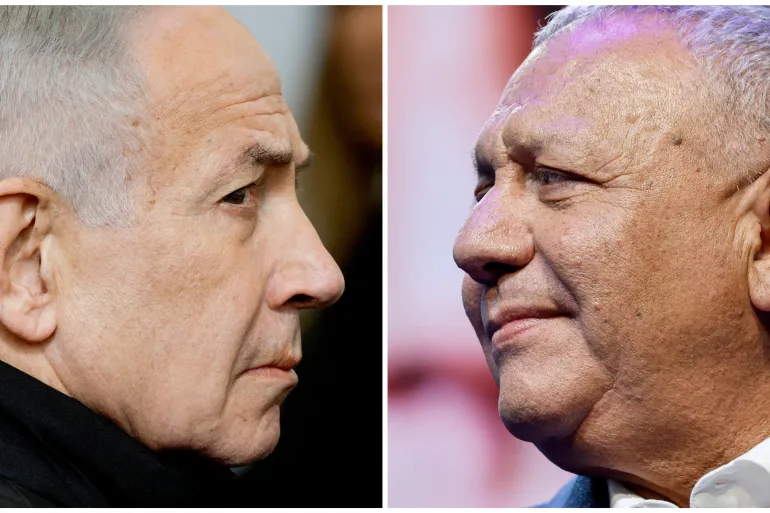
Israel’s parliamentary election has produced a hung Knesset, with neither Prime Minister Benjamin Netanyahu’s political bloc nor the opposition securing the majority needed to form a government, setting the stage for potentially difficult coalition negotiations.
The completed vote count gives Netanyahu’s bloc 53 seats in the 120-member Knesset, while the opposition alliance led by former military chief Gadi Eisenkot has secured 48. Arab-led parties have won a combined 19 seats, placing them in a potentially decisive position in determining the next government.
A party or alliance needs at least 61 seats to command a parliamentary majority. The results therefore leave both principal blocs short of the required number, with the opposition facing the additional challenge of overcoming differences over whether to seek support from Arab-led parties.
The election, held on October 27, was the first since the Hamas-led attacks on southern Israel on October 7, 2023, and the subsequent war in Gaza. It was widely viewed as a referendum on Netanyahu’s leadership and his government’s handling of the country’s security and political challenges.
Coalition negotiations begin
Opposition leaders have begun exploring possible arrangements to form a government. Eisenkot, who heads the Yashar party, met former Prime Minister Naftali Bennett, leader of the Together party, to discuss ways of forming a new government.
Eisenkot also held talks with Yair Golan, chairman of the Democrats party. Golan has supported the possibility of forming a coalition with parties representing Palestinian citizens of Israel, a proposal opposed by several other groups within the opposition alliance.
Golan separately met Mansour Abbas, leader of the United Arab List, known as Ra’am. The party is projected to have secured eight seats, while the Joint List has won 11.
The possibility of relying on Arab-led parties, however, presents a political dilemma for the opposition. Eisenkot has previously ruled out entering into a partnership with Palestinian Israeli parties. Yet, without their support, the opposition bloc is unlikely to reach the 61-seat threshold.
The negotiations could therefore expose divisions within the opposition even as it seeks to capitalise on Netanyahu’s failure to secure a majority.
Dispute over election results
Meanwhile, Netanyahu’s Likud party has raised allegations that Arab-led parties may have influenced the election outcome through irregularities, including possible foreign interference. The allegations have been rejected, and no evidence establishing that the election was stolen has been presented.
Noam Sohlberg, head of Israel’s Central Elections Committee and a Supreme Court judge, said that concerns about possible foreign interference had been brought to his attention in a letter to the Shin Bet security agency. While he said he could not independently verify the allegations, he had asked the agency to investigate them.
Eisenkot accused Netanyahu of attempting to undermine the legitimacy of the election results for political reasons. In a statement posted on social media, he said Netanyahu was using state institutions for personal political interests and that allegations would not change the voters’ verdict.
Political analyst Xavier Abu Eid told Al Jazeera that Netanyahu appeared dissatisfied with the outcome despite his public claims of victory. He also suggested that the opposition could explore parliamentary arrangements, including a possible change in the Knesset speakership, to weaken Netanyahu’s position.
The Central Elections Committee is expected to formally certify the results in the coming days. Until then, the reported seat distribution remains subject to official confirmation.
The immediate challenge for Israel’s political parties is now to assemble a governing coalition. With neither major bloc holding a majority and the opposition divided over cooperation with Arab-led parties, the negotiations could prove as consequential as the election itself.